The word devil is deeply rooted in religion, mythology, culture, and everyday language. Learning devil in different languages helps you understand how various societies describe evil forces, temptation, or symbolic opposition. This guide is useful for language learners, writers, students, and anyone exploring global meanings.
Below, you’ll find a clear explanation and a complete table showing devil in different languages in all languages, written in a simple, readable format and optimized for featured snippets.
What Does “Devil” Mean? Definition and Concept

The word devil generally refers to an evil or supernatural being associated with temptation, sin, and opposition to good. In most religions, the devil is seen as a symbol of evil forces that try to mislead humans from the right path. However, in some cultures and stories, the devil is not always a literal being. Instead, it can represent negative thoughts, inner struggles, or moral challenges that a person faces in life.
Devil in Different Languages Around the World
The table below presents exactly 110 different languages. Each entry includes the language or country, the correct native word for devil, and an easy English pronunciation.
| Language / Country | Native Phrase | Easy Pronunciation |
| English | Devil | DEV-uhl |
| Spanish | Diablo | dee-AH-bloh |
| French | Diable | dee-AH-bluh |
| German | Teufel | TOY-ful |
| Italian | Diavolo | dee-AH-vo-lo |
| Portuguese | Diabo | dee-AH-bo |
| Dutch | Duivel | DOI-vul |
| Russian | Дьявол | DYAH-vul |
| Ukrainian | Диявол | DYAH-vol |
| Polish | Diabeł | DYAH-bel |
| Czech | Ďábel | DYA-bel |
| Slovak | Diabol | DYAH-bol |
| Hungarian | Ördög | UR-dug |
| Romanian | Diavol | dee-AH-vol |
| Bulgarian | Дявол | DYAH-vol |
| Serbian | Ђаво | JYA-vo |
| Croatian | Đavao | JYA-vo |
| Slovenian | Hudič | HOO-dich |
| Greek | Διάβολος | THYA-vo-los |
| Turkish | Şeytan | SHAY-tan |
| Arabic | إبليس | IB-lees |
| Hebrew | שטן | sa-TAN |
| Persian | شیطان | SHEY-taan |
| Urdu | شیطان | SHAY-taan |
| Hindi | शैतान | SHAI-taan |
| Bengali | শয়তান | SHOI-taan |
| Punjabi | ਸ਼ੈਤਾਨ | SHAI-taan |
| Gujarati | શેતાન | SHAY-taan |
| Marathi | सैतान | SAI-taan |
| Tamil | சாத்தான் | SAA-thaan |
| Telugu | సాతాను | SAA-thaa-nu |
| Kannada | ಸೈತಾನ | SAI-taan |
| Malayalam | സാത്താൻ | SAA-thaan |
| Sinhala | සාතන් | SAA-than |
| Nepali | सैतान | SAI-taan |
| Chinese (Mandarin) | 魔鬼 | moh-GWAY |
| Cantonese | 魔鬼 | moh-GWAI |
| Japanese | 悪魔 | A-ku-ma |
| Korean | 악마 | AK-ma |
| Thai | ซาตาน | SAA-taan |
| Vietnamese | Quỷ dữ | KWEE-zoo |
| Indonesian | Setan | SEH-tan |
| Malay | Syaitan | SHAI-tan |
| Filipino | Diyablo | dee-YAB-lo |
| Khmer | សាតាំង | SAA-tang |
| Lao | ຊາຕານ | SAA-taan |
| Burmese | မာရ်နတ် | mar-NAT |
| Mongolian | Чөтгөр | CHUT-gur |
| Kazakh | Шайтан | SHAI-tan |
| Uzbek | Shayton | SHAI-ton |
| Azerbaijani | Şeytan | SHAY-tan |
| Georgian | ეშმაკი | esh-MA-ki |
| Armenian | Սատանա | sa-ta-NA |
| Swahili | Shetani | she-TA-nee |
| Zulu | Usathane | oo-sa-TAH-neh |
| Xhosa | Usathana | oo-sa-TAH-na |
| Afrikaans | Duiwel | DOI-vul |
| Hausa | Shaitan | SHAI-tan |
| Yoruba | Eṣu | EH-shu |
| Igbo | Ekwensu | eh-KWEN-soo |
| Amharic | ሰይጣን | say-TAN |
| Somali | Shaydaan | SHAI-daan |
| Danish | Djævel | YEH-vul |
| Swedish | Djävul | YEH-vul |
| Norwegian | Djevel | YEH-vul |
| Finnish | Paholainen | PA-ho-lai-nen |
| Icelandic | Djöfull | DYUH-full |
| Estonian | Kurat | KOO-rat |
| Latvian | Velns | VEL-ns |
| Lithuanian | Velnias | VEL-nee-as |
| Irish | Diabhal | JEE-uhl |
| Scottish Gaelic | Diabhal | JEE-uhl |
| Welsh | Diafol | DEE-a-vol |
| Basque | Deabrua | deh-AH-broo-a |
| Catalan | Diable | dee-AH-bluh |
| Galician | Diaño | dee-AHN-yo |
| Maltese | Xitan | SHEE-tan |
| Albanian | Djall | jahl |
| Macedonian | Ѓавол | JYA-vol |
| Bosnian | Đavo | JYA-vo |
| Luxembourgish | Däiwel | DAY-vul |
| Tibetan | བདུད | DÜ |
| Maori | Rewera | reh-WEH-ra |
Devil in Religion: Christian, Islamic, and Other Beliefs
Different religions describe the devil in different ways. In Christianity, the devil is often known as Satan, a fallen angel who opposes God and tempts humans into sin. In Islam, the devil is called Iblis or Shaitan, who refused to obey God and misleads people. In Hindu traditions, evil forces exist in many forms, often symbolizing negativity rather than a single devil figure. In folklore and mythology, the devil is sometimes shown as a trickster or symbolic character representing temptation and wrongdoing.
Cultural Meaning of Devil in Different Languages
Across cultures, the devil often represents temptation, chaos, or moral opposition. In some traditions, the devil is a literal being, while in others it is symbolic of inner conflict or wrongdoing.
How to Say Devil in Different Languages Correctly
Pronunciation and cultural context matter. Some languages use the word only in religious settings, while others use it in expressions, stories, or metaphors.
Devil in Religion and Folklore Worldwide
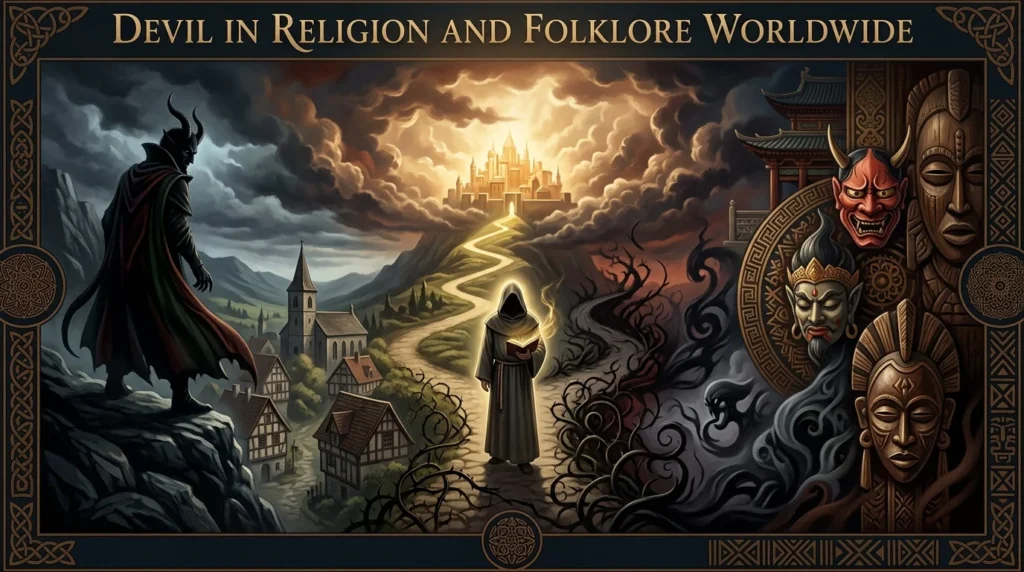
From ancient scriptures to folk tales, devil in different languages around the world reflects local beliefs, fears, and moral lessons passed down through generations.
Conclusion
Learning devil in different languages gives you deeper insight into language, culture, and belief systems worldwide. These translations are accurate, practical, and useful for learning, writing, and global understanding.
FAQs
- What does devil mean in most languages?
It usually refers to an evil being, tempter, or supernatural force. - Is devil the same as demon in all cultures?
No, some cultures clearly distinguish between the two, while others use them interchangeably. - Is the word devil always religious?
Not always. It can be symbolic or used in everyday expressions. - Are devil translations similar across languages?
Many are related, but pronunciation and meaning can vary widely. - Are these translations suitable for general use?
Yes, all listed words are commonly used and widely understood.