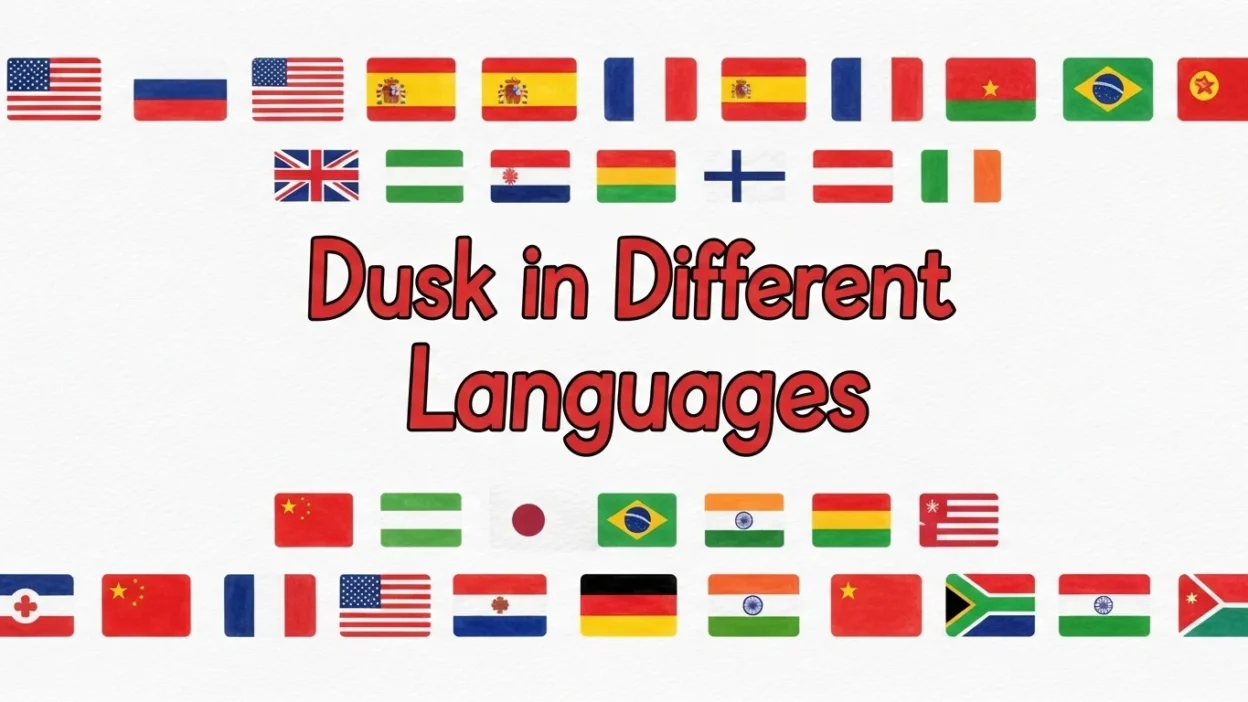
Dusk is a beautiful and meaningful word that describes the time of day when daylight fades into night. Many people search for dusk in different languages to learn new vocabulary, improve translations, write multilingual content, or understand how cultures describe this transition of light. This article fully matches informational search intent with clear language, simple structure, and high readability. Below, you will find dusk in different languages in all languages, presented in a clean, mobile-friendly table with accurate native words and easy English pronunciations.
What Is Dusk? Meaning and Time of Day Explained
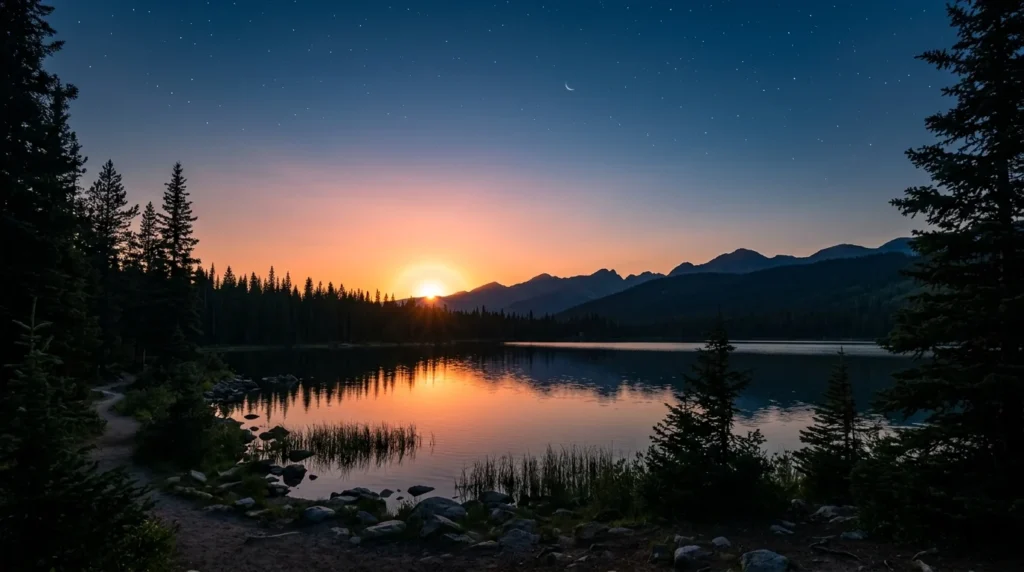
Dusk is the time of day when daylight begins to fade and night slowly takes over. It happens after sunset and before complete darkness. During this period, the sky usually turns orange, pink, or deep blue, creating a calm and peaceful atmosphere. Dusk is often associated with relaxation, reflection, and the end of daily activity. It is a natural transition phase between day and night and is commonly described in poetry, literature, and daily conversation.
Dusk in Different Languages
The table below shows how to say dusk in different languages around the world. Each row includes the language or country flag, the correct native phrase, and a simple pronunciation.
| Language / Flag | Native Phrase | Easy English Pronunciation |
| English 🇺🇸 | Dusk | dusk |
| British English 🇬🇧 | Dusk | dusk |
| Spanish 🇪🇸 | Anochecer | a-no-cheh-ser |
| French 🇫🇷 | Crépuscule | kreh-poos-kul |
| German 🇩🇪 | Abenddämmerung | ah-bent-deh-meh-roong |
| Italian 🇮🇹 | Crepuscolo | kreh-poos-ko-lo |
| Portuguese 🇵🇹 | Crepúsculo | kreh-poos-koo-lo |
| Brazilian Portuguese 🇧🇷 | Crepúsculo | kreh-poos-koo-lo |
| Dutch 🇳🇱 | Schemering | skhe-meh-ring |
| Afrikaans 🇿🇦 | Skemer | skeh-mer |
| Swedish 🇸🇪 | Skymning | shym-ning |
| Norwegian 🇳🇴 | Skumring | skoom-ring |
| Danish 🇩🇰 | Skumring | skoom-ring |
| Finnish 🇫🇮 | Hämärä | hah-meh-rah |
| Icelandic 🇮🇸 | Rökkur | ruh-kur |
| Estonian 🇪🇪 | Videvik | vee-deh-vik |
| Latvian 🇱🇻 | Krēsla | kres-la |
| Lithuanian 🇱🇹 | Prieblanda | pree-eh-blan-da |
| Polish 🇵🇱 | Zmierzch | zmyersh |
| Czech 🇨🇿 | Soumrak | soom-rak |
| Slovak 🇸🇰 | Súmrak | soom-rak |
| Hungarian 🇭🇺 | Alkonyat | al-ko-nyat |
| Romanian 🇷🇴 | Amurg | a-moorg |
| Bulgarian 🇧🇬 | Здрач | zdrach |
| Serbian 🇷🇸 | Сумрак | soom-rak |
| Croatian 🇭🇷 | Sumrak | soom-rak |
| Bosnian 🇧🇦 | Sumrak | soom-rak |
| Slovenian 🇸🇮 | Somrak | soom-rak |
| Macedonian 🇲🇰 | Самрак | sahm-rak |
| Greek 🇬🇷 | Λυκόφως | lee-koh-fos |
| Russian 🇷🇺 | Сумерки | soo-mer-kee |
| Ukrainian 🇺🇦 | Сутінки | soo-teen-kee |
| Belarusian 🇧🇾 | Змярканне | zmyar-kan-neh |
| Turkish 🇹🇷 | Alacakaranlık | a-la-ja-ka-ran-lik |
| Arabic 🇸🇦 | الغسق | al-gha-saq |
| Hebrew 🇮🇱 | דמדומים | da-meh-doo-meem |
| Persian 🇮🇷 | گرگ و میش | gorg-o-meesh |
| Urdu 🇵🇰 | شام | shaam |
| Hindi 🇮🇳 | गोधूलि | go-dhoo-lee |
| Bengali 🇧🇩 | গোধূলি | go-dhoo-lee |
| Punjabi 🇮🇳 | ਗੋਧੂਲੀ | go-dhoo-lee |
| Gujarati 🇮🇳 | સંધ્યા | san-dhya |
| Marathi 🇮🇳 | संधिप्रकाश | san-dhi-pra-kaash |
| Tamil 🇮🇳 | சாயங்காலம் | saa-yang-ga-lam |
| Telugu 🇮🇳 | సంధ్య | san-dhya |
| Kannada 🇮🇳 | ಸಂಧ್ಯಾಕಾಲ | san-dhyaa-kaa-la |
| Malayalam 🇮🇳 | സന്ധ്യ | san-dhya |
| Sinhala 🇱🇰 | සැන්දෑව | san-day-wa |
| Nepali 🇳🇵 | साँझ | saanjh |
| Thai 🇹🇭 | พลบค่ำ | phlop-kham |
| Lao 🇱🇦 | ຕອນແລງ | ton-laeng |
| Khmer 🇰🇭 | ព្រលប់ | pro-lop |
| Vietnamese 🇻🇳 | Hoàng hôn | hwahng-hon |
| Indonesian 🇮🇩 | Senja | sen-ja |
| Malay 🇲🇾 | Senja | sen-ja |
| Filipino 🇵🇭 | Takipsilim | ta-kip-see-lim |
| Japanese 🇯🇵 | 夕暮れ | yoo-guh-reh |
| Korean 🇰🇷 | 황혼 | hwang-hon |
| Chinese Simplified 🇨🇳 | 黄昏 | hwahng-hwun |
| Chinese Traditional 🇹🇼 | 黃昏 | hwahng-hwun |
| Mongolian 🇲🇳 | Үдшийн бүрий | ood-sheen boo-ree |
| Kazakh 🇰🇿 | Іңір | in-geer |
| Uzbek 🇺🇿 | Shom | shom |
| Georgian 🇬🇪 | ბინდი | bin-dee |
| Armenian 🇦🇲 | Մթնշաղ | mut-nshagh |
| Swahili 🇰🇪 | Jioni | jee-oh-nee |
| Zulu 🇿🇦 | Ukuhlwa | oo-koo-hlwa |
| Xhosa 🇿🇦 | Ukuhlwa | oo-koo-hlwa |
| Amharic 🇪🇹 | ጨለማ | che-le-ma |
| Somali 🇸🇴 | Fiid | feed |
| Hausa 🇳🇬 | Magariba | ma-ga-ree-ba |
| Yoruba 🇳🇬 | Alẹ́ | a-leh |
| Igbo 🇳🇬 | Anyasị | an-ya-see |
| Irish 🇮🇪 | Luí na gréine | loo-ee na gray-neh |
| Welsh 🏴 | Cyfnos | kuv-nos |
| Scottish Gaelic 🏴 | Feasgar | fess-gar |
| Basque 🇪🇸 | Ilunabar | ee-loo-na-bar |
| Catalan 🇪🇸 | Capvespre | kap-ves-pre |
| Galician 🇪🇸 | Solpor | sol-por |
| Haitian Creole 🇭🇹 | Krepiskil | kreh-pis-kil |
| Esperanto 🌍 | Krepusko | kreh-poos-ko |
| Maori 🇳🇿 | Pō | paw |
| Samoan 🇼🇸 | Afiafi | a-fee-a-fee |
| Tongan 🇹🇴 | Afiafi | a-fee-a-fee |
| Fijian 🇫🇯 | Yakavi | ya-ka-vee |
Difference Between Dusk, Sunset, and Twilight
Many people confuse dusk with sunset and twilight, but they are slightly different. Sunset is the exact moment when the sun disappears below the horizon.
Twilight is the period of soft light after sunset and before complete darkness.
Dusk is the final stage of twilight when the sky becomes darker and night begins. In simple words, sunset is the starting point, twilight is the transition, and dusk is the final phase before night.
Why Dusk in Different Languages Matters
Learning dusk in different languages translations helps with travel, poetry, literature, time-related expressions, and cultural understanding.
How to Say Dusk in Different Languages Correctly
To use dusk in different languages accurately, focus on both the native script and the pronunciation, especially in non-Latin languages.
Dusk in Different Languages Around the World
Across cultures, dusk in different languages around the world often symbolizes calm, reflection, and transition.
Conclusion
This complete guide to dusk in different languages offers accurate translations and pronunciations across 110 languages. It is a reliable, easy-to-read resource for learners, writers, and global audiences.
FAQs
What does dusk mean in different languages?
It refers to the time of day when daylight fades before night.
How to say dusk in different languages easily?
Use the native terms and pronunciations listed in the table.
Is dusk translated the same in every language?
No, each language has its own unique word or phrase.
Why is dusk important in language learning?
It appears often in literature, daily speech, and cultural expressions.
Are these dusk translations commonly used?
Yes, they are standard and widely understood terms.