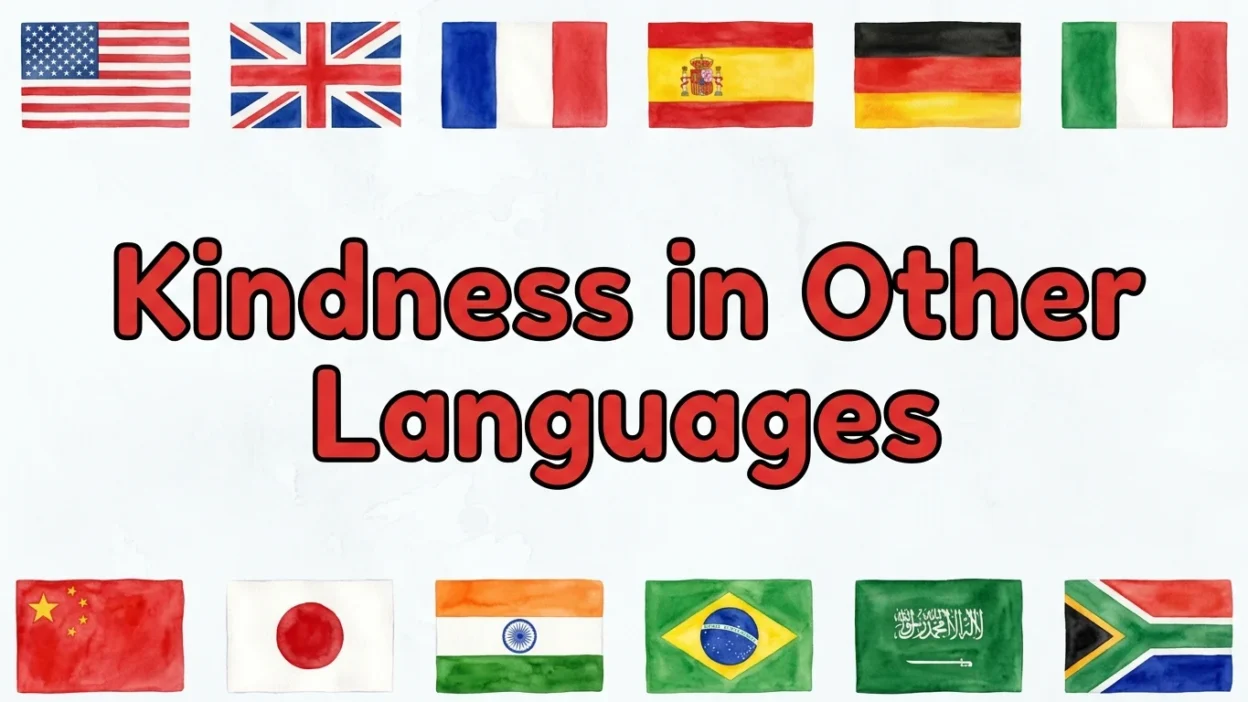
Kindness is one of the most powerful human values shared across cultures, religions, and countries. Whether you are traveling, learning languages, creating multilingual content, or simply exploring global cultures, knowing how to say kindness in other languages helps you connect with people worldwide.
This guide covers kindness in different languages with native translations, easy pronunciation, and global language variations. If you are searching for kindness translations, how to say kindness around the world, or kindness in all languages, this article provides a simple and easy-to-read reference table optimized for quick learning.
Kindness in Different Languages Table
| Language | Translation | Pronunciation |
| Afrikaans | Vriendelikheid | VREEN-de-lik-hate |
| Albanian | Mirësi | Mee-ruh-see |
| Amharic | ቸርነት | Cher-net |
| Arabic | اللطف | Al-lootf |
| Armenian | Բարություն | Ba-roo-tyoon |
| Azerbaijani | Xeyirxahlıq | Khe-yir-kha-lik |
| Basque | Adeitasuna | Ah-day-ta-soo-na |
| Belarusian | Дабрыня | Da-bri-nya |
| Bengali | দয়া | Do-ya |
| Bosnian | Ljubaznost | Lyoo-baz-nost |
| Bulgarian | Доброта | Dob-ro-ta |
| Burmese | ကြင်နာမှု | Kyin-na-mhu |
| Catalan | Amabilitat | A-ma-bee-lee-tat |
| Cebuano | Pagkamabination | Pag-ka-ma-bee-na-tee-on |
| Chinese Simplified | 善良 | Shan-lyang |
| Chinese Traditional | 善良 | Shan-lyang |
| Corsican | Gentilezza | Jen-tee-let-sa |
| Croatian | Ljubaznost | Lyoo-baz-nost |
| Czech | Laskavost | Las-ka-vost |
| Danish | Venlighed | Ven-lee-hide |
| Dutch | Vriendelijkheid | Vreen-de-lik-hide |
| English | Kindness | Kind-ness |
| Esperanto | Afableco | A-fa-blet-so |
| Estonian | Lahkus | Lah-kus |
| Filipino | Kabaitan | Ka-bye-ta-an |
| Finnish | Ystävällisyys | Us-ta-val-lee-suus |
| French | Gentillesse | Zhon-tee-yes |
| Galician | Bondade | Bon-da-de |
| Georgian | სიკეთე | See-ke-te |
| German | Freundlichkeit | Froind-likh-kite |
| Greek | Καλοσύνη | Ka-lo-see-nee |
| Gujarati | દયા | Da-ya |
| Haitian Creole | Jantiyès | Zhan-tee-yes |
| Hausa | Alheri | Al-he-ree |
| Hawaiian | Lokomaikaʻi | Lo-ko-ma-ee-ka-ee |
| Hebrew | טוב לב | Tov lev |
| Hindi | दयालुता | Da-yaa-loo-taa |
| Hmong | Kev siab zoo | Kev see-a zoo |
| Hungarian | Kedvesség | Ked-vesh-shayg |
| Icelandic | Góðvild | Goth-vild |
| Igbo | Obiọma | O-bee-o-ma |
| Indonesian | Kebaikan | Ke-bye-kan |
| Irish | Cineáltas | Kin-ale-tas |
| Italian | Gentilezza | Jen-tee-let-sa |
| Japanese | 優しさ | Ya-sa-shee-sa |
| Javanese | Kabecikan | Ka-be-chee-kan |
| Kannada | ದಯೆ | Da-ye |
| Kazakh | Мейірімділік | May-ir-im-di-lik |
| Khmer | សេចក្តីសប្បុរស | Saych-kday-sa-bo-roh |
| Korean | 친절 | Chin-jol |
| Kurdish | دڵسۆزی | Dil-so-zee |
| Kyrgyz | Боорукердик | Bo-roo-ker-dik |
| Lao | ຄວາມໃຈດີ | Khwam-jai-dee |
| Latin | Benignitas | Be-nig-nee-tas |
| Latvian | Laipnība | Liep-nee-ba |
| Lithuanian | Gerumas | Ge-roo-mas |
| Luxembourgish | Frëndlechkeet | Frend-lekh-kate |
| Macedonian | Љубезност | Lyoo-bez-nost |
| Malagasy | Hatsaram-panahy | Hat-sa-ram-pa-na-hee |
| Malay | Kebaikan | Ke-bye-kan |
| Malayalam | ദയ | Da-ya |
| Maltese | Kindness | Kind-ness |
| Maori | Atawhai | A-ta-why |
| Marathi | दयाळूपणा | Da-yaa-loo-pa-na |
| Mongolian | Сайхан сэтгэл | Sai-khan set-gel |
| Nepali | दयालुता | Da-yaa-loo-taa |
| Norwegian | Vennlighet | Ven-lee-het |
| Pashto | مهرباني | Mehr-ba-nee |
| Persian | مهربانی | Mehr-ba-nee |
| Polish | Życzliwość | Zheech-lee-voshch |
| Portuguese | Gentileza | Zhen-chee-lay-za |
| Punjabi | ਦਇਆ | Da-ya |
| Romanian | Bunătate | Boo-na-ta-te |
| Russian | Доброта | Dob-ro-ta |
| Samoan | Agalelei | A-ga-le-lay |
| Scots Gaelic | Caoimhneas | Kwee-ness |
| Serbian | Љубазност | Lyoo-baz-nost |
| Sesotho | Mohau | Mo-hau |
| Shona | Mutsa | Moot-sa |
| Sindhi | مهرباني | Mehr-ba-nee |
| Sinhala | කරුණාව | Ka-roo-na-va |
| Slovak | Láskavosť | Las-ka-vost |
| Slovenian | Prijaznost | Pree-yaz-nost |
| Somali | Naxariis | Na-kha-rees |
| Spanish | Amabilidad | A-ma-bee-lee-dad |
| Sundanese | Kahadean | Ka-ha-day-an |
| Swahili | Wema | Weh-ma |
| Swedish | Vänlighet | Ven-lee-het |
| Tajik | Меҳрубонӣ | Mehru-bo-nee |
| Tamil | அன்பு | An-boo |
| Tatar | Игелек | Ee-ge-lek |
| Telugu | దయ | Da-ya |
| Thai | ความเมตตา | Khwam-met-ta |
| Turkish | Nezaket | Ne-za-ket |
| Turkmen | Hoşniýetlilik | Hosh-ni-yet-li-lik |
| Ukrainian | Доброта | Dob-ro-ta |
| Urdu | مہربانی | Mehr-ba-nee |
| Uyghur | مېھىر-شەپقەت | Meh-ir-shep-ket |
| Uzbek | Mehribonlik | Mehr-ee-bon-lik |
| Vietnamese | Lòng tốt | Long tot |
| Welsh | Caredigrwydd | Ka-red-ig-roo-ith |
| Xhosa | Ububele | Oo-boo-be-le |
| Yiddish | גוטסקייט | Goot-skyte |
| Yoruba | Inurere | Ee-noo-re-re |
| Zulu | Umusa | Oo-moo-sa |
| Fijian | Loloma | Lo-lo-ma |
| Frisian | Freonlikens | Frone-lee-kens |
| Guarani | Py’aguapy | Pya-goo-a-py |
| Inuktitut | ᐃᓇᒃᑯᓯᖅ | Ee-nak-koo-seek |
| Kinyarwanda | Ineza | Ee-neh-za |
| Lingala | Boboto | Bo-bo-to |
| Navajo | Hózhǫ́ | Ho-zho |
| Oromo | Gaarummaa | Gaa-roo-mma |
| Quechua | Sumaq sonqo | Soo-mak son-ko |
| Tahitian | Maitai | My-tie |
| Tibetan | བཟང་པོ | Zang-po |
| Wolof | Yërmande | Yer-man-day |
| Zarma | Hinni | Hin-nee |
How to Say Kindness in Other Languages
The word kindness is commonly associated with compassion, generosity, empathy, and care. Different cultures express kindness in unique ways, but the meaning remains universally positive.
Here are some popular translations:
- Kindness in Spanish: Amabilidad
- Kindness in French: Gentillesse
- Kindness in German: Freundlichkeit
- Kindness in Japanese: 優しさ
- Kindness in Arabic: اللطف
- Kindness in Hindi: दयालुता
- Kindness in Chinese: 善良
- Kindness in Korean: 친절
- Kindness in Russian: Доброта
- Kindness in Urdu: مہربانی
Why Learning Kindness in Different Languages Matters
Learning kindness around the world helps improve communication and cultural understanding. It is useful for:
- Language learners
- Travelers
- Students
- Writers and bloggers
- International businesses
- Social media creators
- Multilingual education
Knowing kindness translations also helps people create more respectful and welcoming global conversations.
Kindness Around the World
Every culture values kindness differently, but the idea is deeply respected everywhere. In many Asian cultures, kindness is connected with harmony and respect. In European languages, it is often associated with friendliness and politeness. African and Middle Eastern cultures frequently connect kindness with hospitality and generosity.
Because of this universal importance, kindness in all languages remains a popular search topic online.
Common Uses of the Word Kindness in Different Languages
People often search for kindness translations for:
- Tattoo ideas
- Language learning
- School projects
- International greetings
- Cultural studies
- Motivational quotes
- Social campaigns
- Travel communication
The word also appears in books, songs, movies, and educational content across many countries.
Conclusion
Kindness is a universal value that connects people across borders and cultures. Learning how to say kindness in other languages is a meaningful way to explore the world and communicate with people more respectfully. Whether you are studying languages, traveling internationally, or creating multilingual content, these kindness translations around the world can help you build stronger cultural connections.
FAQs
How do you say kindness in different languages?
Kindness is translated differently worldwide, such as Amabilidad in Spanish, Gentillesse in French, and Freundlichkeit in German.
What is kindness in Asian languages?
In Asian languages, kindness includes 優しさ in Japanese, 善良 in Chinese, 친절 in Korean, and दयालुता in Hindi.
Why do people search for kindness in other languages?
People search for kindness translations for language learning, tattoos, travel, education, and cultural understanding.
What is the most common translation of kindness worldwide?
Many languages translate kindness into words connected with compassion, goodness, politeness, or generosity.
Is kindness a universal concept?
Yes, kindness is valued in nearly every culture and language around the world, even though the exact wording differs.