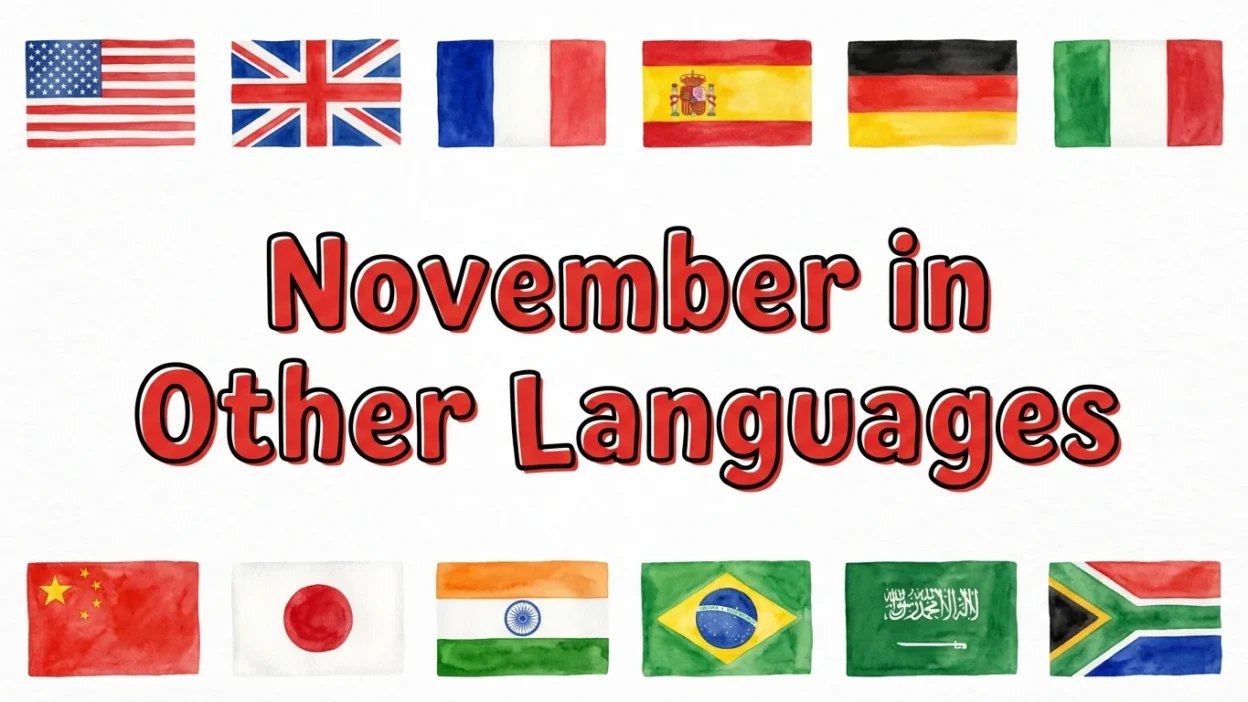
When I first explored November across different languages, I realized how one simple word can reflect worldwide culture and everyday communication. This page features both translation and translations from over 100 other languages, allowing readers to learn how the month is written, spoken, and understood in many global languages. From foreign languages to regional languages and cultural languages, every language translation carries unique meanings connected to local traditions, seasons, calendars, and history. During my own language learning journey, I found that hearing real voices through audio pronunciation tools made it much easier to listen, read, and pronounce words correctly in more than 40 languages. While practicing speaking and reading, I noticed that native pronunciation improved memory far more than simply memorizing words from lists. A strong pronunciation guide also builds better linguistic understanding, especially when studying spoken languages and developing stronger multilingual skills. Learning month names in both international languages and local dialects can expand your vocabulary and improve overall pronunciation naturally. Whether someone studies language, wants greater fluency, or hopes to create a practical bridge between people and cultures, understanding November in many forms becomes a meaningful and useful experience.
November in Different Languages Table
| Language | Translation | Pronunciation |
| English | November | no-vem-ber |
| Spanish | Noviembre | no-vee-em-bray |
| French | Novembre | no-vom-br |
| German | November | no-vem-ber |
| Italian | Novembre | no-vem-bray |
| Portuguese | Novembro | no-vem-bro |
| Dutch | November | no-vem-ber |
| Russian | Ноябрь | noy-abr |
| Ukrainian | Листопад | lee-sto-pad |
| Polish | Listopad | lee-sto-pad |
| Czech | Listopad | lee-sto-pad |
| Slovak | November | no-vem-ber |
| Hungarian | November | no-vem-ber |
| Romanian | Noiembrie | noy-em-bree-eh |
| Bulgarian | Ноември | no-em-vree |
| Serbian | Новембар | no-vem-bar |
| Croatian | Studeni | stoo-deh-nee |
| Bosnian | Novembar | no-vem-bar |
| Slovenian | November | no-vem-ber |
| Albanian | Nëntor | nen-tor |
| Greek | Νοέμβριος | no-em-vree-os |
| Turkish | Kasım | ka-sum |
| Arabic | نوفمبر | noo-fem-ber |
| Hebrew | נובמבר | no-vem-ber |
| Persian | نوامبر | نو-ام-بر |
| Urdu | نومبر | no-vem-ber |
| Hindi | नवंबर | na-vem-ber |
| Bengali | নভেম্বর | no-vem-bor |
| Punjabi | ਨਵੰਬਰ | na-vam-bar |
| Gujarati | નવેમ્બર | na-vem-ber |
| Marathi | नोव्हेंबर | नो-वेम-बर |
| Tamil | நவம்பர் | na-vam-ber |
| Telugu | నవంబర్ | na-vam-bar |
| Kannada | ನವೆಂಬರ್ | na-vem-ber |
| Malayalam | നവംബർ | na-vem-ber |
| Sinhala | නොවැම්බර් | no-vem-ber |
| Nepali | नोभेम्बर | no-vem-ber |
| Chinese | 十一月 | shi-yi-yue |
| Japanese | 11月 | juu-ichi-gatsu |
| Korean | 십일월 | shi-bil-wol |
| Thai | พฤศจิกายน | pruet-sa-ji-ga-yon |
| Vietnamese | Tháng mười một | thang muoi mot |
| Indonesian | November | no-vem-ber |
| Malay | November | no-vem-ber |
| Filipino | Nobyembre | nob-yem-breh |
| Swahili | Novemba | no-vem-ba |
| Zulu | Novemba | no-vem-ba |
| Afrikaans | November | no-vem-ber |
| Somali | Nofembar | no-fem-bar |
| Hausa | Nuwamba | noo-wam-ba |
| Yoruba | Kọkànlá Oṣù | ko-kan-la o-shu |
| Igbo | Nọvemba | no-vem-ba |
| Amharic | ኖቬምበር | नो-वेम-बर |
| Armenian | Նոյեմբեր | noy-em-ber |
| Georgian | ნოემბერი | ნო-ემ-ბე-რი |
| Azerbaijani | Noyabr | noy-abr |
| Kazakh | Қараша | ka-ra-sha |
| Uzbek | Noyabr | noy-abr |
| Turkmen | Noýabr | noy-abr |
| Kyrgyz | Ноябрь | noy-abr |
| Tajik | Ноябр | noy-abr |
| Mongolian | Арваннэгдүгээр сар | ar-van-neg-du-ger sar |
| Tibetan | བཅུ་གཅིག་ཟླ་ | chu-chik-da |
| Burmese | နိုဝင်ဘာ | no-win-bar |
| Khmer | វិច្ឆិកា | vich-che-ka |
| Lao | ພະຈິກ | pha-jik |
| Icelandic | Nóvember | no-vem-ber |
| Danish | November | no-vem-ber |
| Swedish | November | no-vem-ber |
| Norwegian | November | no-vem-ber |
| Finnish | Marraskuu | mar-ras-koo |
| Estonian | November | no-vem-ber |
| Latvian | Novembris | no-vem-bris |
| Lithuanian | Lapkritis | lap-kree-tis |
| Irish | Samhain | sow-in |
| Welsh | Tachwedd | tach-weth |
| Scottish Gaelic | An t-Samhain | an t-ow-in |
| Basque | Azaroa | a-za-ro-a |
| Catalan | Novembre | no-vem-bray |
| Galician | Novembro | no-vem-bro |
| Maltese | Novembru | no-vem-broo |
| Esperanto | Novembro | no-vem-bro |
| Latin | November | no-vem-ber |
| Maori | Noema | no-eh-ma |
| Hawaiian | Nowemapa | no-we-ma-pa |
| Samoan | Novema | no-ve-ma |
| Tongan | Nōvema | no-ve-ma |
| Fijian | Noveba | no-ve-ba |
| Tahitian | Novema | no-ve-ma |
| Malagasy | Novambra | no-vam-bra |
| Luxembourgish | November | no-vem-ber |
| Belarusian | Лістапад | lis-ta-pad |
| Macedonian | Ноември | no-em-vree |
| Pashto | نومبر | no-vem-ber |
| Kurdish | Mijdar | mij-dar |
| Dari | نوامبر | نو-ام-بر |
| Syriac | ܢܘܒܡܒܪ | no-vem-ber |
| Frisian | Novimber | no-vim-ber |
| Breton | Du | doo |
| Corsican | Nuvembre | noo-vem-bray |
| Sardinian | Santandria | san-tan-dree-a |
| Occitan | Novembre | no-vem-bre |
| Xhosa | Novemba | no-vem-ba |
| Shona | Mbudzi | m-boo-dzi |
| Kinyarwanda | Ugushyingo | oo-goo-shin-go |
| Kirundi | Munyonyo | moo-nyon-yo |
| Chichewa | Novembala | no-vem-ba-la |
| Sesotho | Pulungoana | poo-loon-go-a-na |
| Tswana | Ngwanatsele | ngwa-na-tseh-le |
| Aymara | Lapaka Phaxsi | la-pa-ka phak-si |
| Quechua | Ayamarq’a | a-ya-mar-ka |
| Guarani | Jasypateĩ | ja-su-pa-tei |
| Nahuatl | Atemoztli | a-te-moz-tli |
| Inuktitut | ᓄᕕᐱᕆ | noo-vi-pi-ri |
| Greenlandic | Novemberi | no-vem-be-ri |
| Luxembourgish | November | no-vem-ber |
How to Say November in Other Languages
People often search for how to say November in other languages while learning new vocabulary, preparing for travel, or studying world cultures. Month names are among the first words taught in language classes because they are used in dates, schedules, calendars, and conversations every day.
In many languages, the word November comes from Latin origins connected to the Roman calendar. However, some languages use completely different names based on weather, seasons, farming traditions, or historical events.
November Translations Around the World
November translations around the world show how languages evolve differently even when referring to the same month. For example, Slavic languages often use seasonal names connected to falling leaves or cold weather, while Romance languages keep forms closer to the Latin word “November.”
Asian languages may use numbering systems for months instead of unique names. Chinese, Japanese, and Korean commonly describe November as the eleventh month in their calendar systems.
Why Learn Month Names in Different Languages
Learning month names improves pronunciation, vocabulary, reading, and speaking skills. It also helps with:
- International travel
- School and language classes
- Cultural understanding
- Translation practice
- Multilingual communication
- Calendar reading
- Global business communication
Simple vocabulary like month names creates a strong base for language learning and daily conversation.
November in All Languages and Global Communication
Understanding November in all languages supports better communication in international settings. Whether you are reading foreign calendars, booking travel dates, translating documents, or studying another culture, month vocabulary is useful in everyday life.
Many multilingual speakers practice months first because they appear in birthdays, holidays, events, and official documents. This makes November translations an important part of global language learning.
Conclusion
Learning November in other languages is a simple but valuable way to explore cultures, improve pronunciation, and build multilingual vocabulary. From European and Asian languages to African and Indigenous dialects, every translation reflects unique cultural and linguistic traditions around the world.
FAQs
What is November in different languages? November is translated differently across world languages. Examples include Noviembre in Spanish, Novembre in French, and Kasım in Turkish.
Why do some languages use different names for November? Some languages follow Latin calendar traditions, while others use seasonal, historical, or cultural naming systems.
How do you pronounce November in foreign languages? Pronunciation changes by language and accent. Many learners use audio pronunciation guides to practice speaking correctly.
Which languages use the same word for November? Languages such as English, German, Dutch, and several Scandinavian languages use very similar forms of the word November.
Why is learning month names important in language learning? Month names are essential for reading dates, calendars, schedules, travel plans, and everyday conversations in any language.