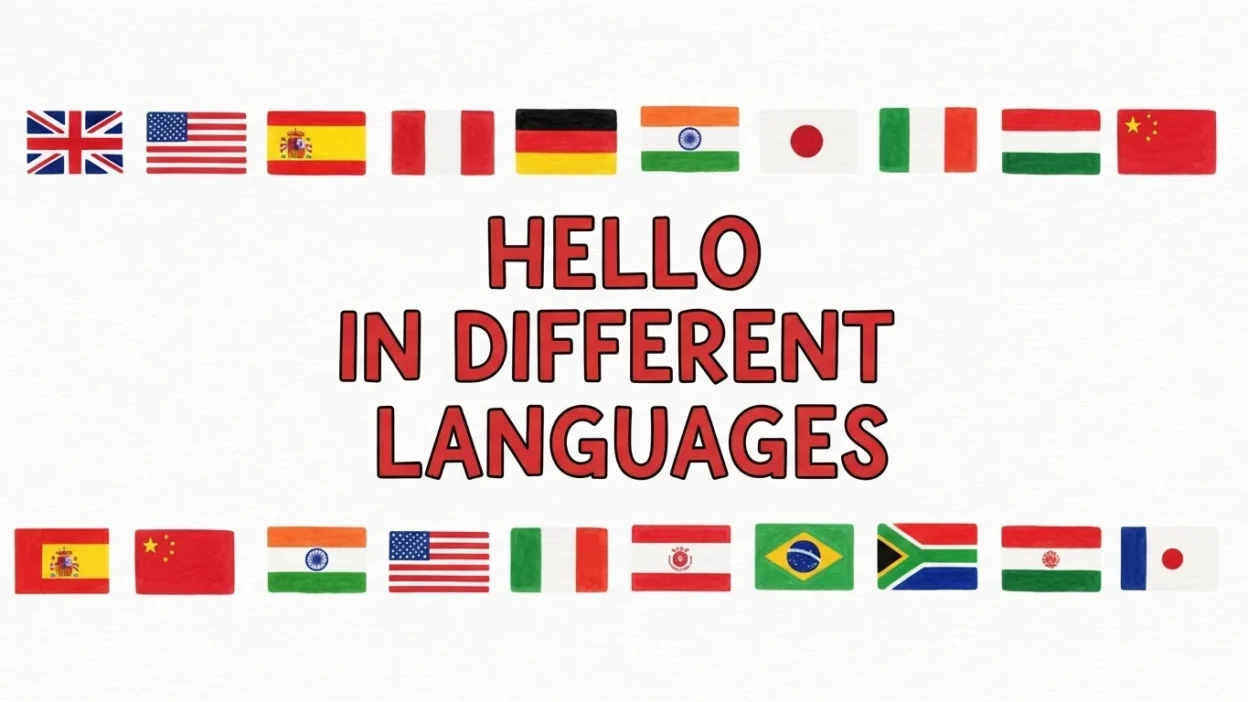
Hello is one of the first words people learn in any language. It is used to greet, connect, and start conversations across cultures. Many people search for hello in different languages to improve communication, create multilingual content, learn languages, or understand global greetings. This guide is written to match informational search intent and clearly explain how to say hello in different languages around the world.
Below, you’ll find hello in different languages in all languages, presented in a clean, simple, and mobile-friendly table optimized for featured snippets.
Hello in Different Languages
| Language / Flag | Native Phrase | Easy English Pronunciation |
| English 🇬🇧 | Hello | heh-LO |
| Spanish 🇪🇸 | Hola | OH-la |
| French 🇫🇷 | Bonjour | bon-ZHOOR |
| German 🇩🇪 | Hallo | HA-lo |
| Italian 🇮🇹 | Ciao | chow |
| Portuguese 🇵🇹 | Olá | o-LA |
| Dutch 🇳🇱 | Hallo | HA-lo |
| Russian 🇷🇺 | Привет | pri-VYET |
| Arabic 🇸🇦 | مرحبا | mar-ha-ba |
| Chinese (Mandarin) 🇨🇳 | 你好 | nee-how |
| Japanese 🇯🇵 | こんにちは | kon-nee-chee-wa |
| Korean 🇰🇷 | 안녕하세요 | an-nyeong-ha-se-yo |
| Hindi 🇮🇳 | नमस्ते | na-mas-te |
| Urdu 🇵🇰 | السلام علیکم | as-sa-laam a-lay-kum |
| Bengali 🇧🇩 | হ্যালো | ha-lo |
| Punjabi 🇮🇳 | ਸਤ ਸ੍ਰੀ ਅਕਾਲ | sat-sri-a-kaal |
| Tamil 🇮🇳 | வணக்கம் | va-nak-kam |
| Telugu 🇮🇳 | నమస్కారం | na-mas-kaa-ram |
| Marathi 🇮🇳 | नमस्कार | na-mas-kaar |
| Gujarati 🇮🇳 | નમસ્તે | na-mas-te |
| Kannada 🇮🇳 | ನಮಸ್ಕಾರ | na-mas-kaa-ra |
| Malayalam 🇮🇳 | നമസ്കാരം | na-mas-kaa-ram |
| Sinhala 🇱🇰 | ආයුබෝවන් | a-yu-bo-wan |
| Nepali 🇳🇵 | नमस्ते | na-mas-te |
| Thai 🇹🇭 | สวัสดี | sa-wa-dee |
| Vietnamese 🇻🇳 | Xin chào | sin chow |
| Indonesian 🇮🇩 | Halo | ha-lo |
| Malay 🇲🇾 | Hai | hi |
| Filipino 🇵🇭 | Kamusta | ka-moos-ta |
| Swahili 🇰🇪 | Jambo | jam-bo |
| Zulu 🇿🇦 | Sawubona | sa-woo-bo-na |
| Afrikaans 🇿🇦 | Hallo | ha-lo |
| Yoruba 🇳🇬 | Bawo | ba-wo |
| Igbo 🇳🇬 | Ndewo | n-day-wo |
| Hausa 🇳🇬 | Sannu | san-no |
| Greek 🇬🇷 | Γεια | yah |
| Turkish 🇹🇷 | Merhaba | mare-ha-ba |
| Persian 🇮🇷 | سلام | sa-laam |
| Pashto 🇦🇫 | سلام | sa-laam |
| Hebrew 🇮🇱 | שלום | sha-lom |
| Polish 🇵🇱 | Cześć | cheshch |
| Czech 🇨🇿 | Ahoj | a-hoy |
| Slovak 🇸🇰 | Ahoj | a-hoy |
| Hungarian 🇭🇺 | Szia | see-ya |
| Romanian 🇷🇴 | Salut | sa-loot |
| Bulgarian 🇧🇬 | Здравей | zda-ra-vey |
| Serbian 🇷🇸 | Здраво | zda-ra-vo |
| Croatian 🇭🇷 | Bok | bok |
| Bosnian 🇧🇦 | Zdravo | zda-ra-vo |
| Slovenian 🇸🇮 | Živjo | zhee-vyo |
| Ukrainian 🇺🇦 | Привіт | pry-veet |
| Lithuanian 🇱🇹 | Labas | la-bas |
| Latvian 🇱🇻 | Sveiki | svei-kee |
| Estonian 🇪🇪 | Tere | te-re |
| Finnish 🇫🇮 | Hei | hey |
| Swedish 🇸🇪 | Hej | hey |
| Norwegian 🇳🇴 | Hei | hey |
| Danish 🇩🇰 | Hej | hey |
| Icelandic 🇮🇸 | Halló | ha-low |
| Irish 🇮🇪 | Dia dhuit | dee-a gwit |
| Welsh | Helo | he-lo |
| Scots Gaelic | Halò | ha-lo |
| Maltese 🇲🇹 | Bongu | bon-goo |
| Albanian 🇦🇱 | Përshëndetje | per-shen-det-ye |
| Armenian 🇦🇲 | Բարև | ba-rev |
| Georgian 🇬🇪 | გამარჯობა | ga-mar-jo-ba |
| Kazakh 🇰🇿 | Сәлем | sa-lem |
| Uzbek 🇺🇿 | Salom | sa-lom |
| Turkmen 🇹🇲 | Salam | sa-lam |
| Mongolian 🇲🇳 | Сайн байна уу | sain bai-na-oo |
| Tibetan 🇹🇧 | བཀྲ་ཤིས | ta-shi |
| Lao 🇱🇦 | ສະບາຍດີ | sa-bai-dee |
| Khmer 🇰🇭 | សួស្តី | su-os-dey |
| Burmese 🇲🇲 | မင်္ဂလာပါ | min-ga-la-ba |
| Amharic 🇪🇹 | ሰላም | se-laam |
| Somali 🇸🇴 | Salaan | sa-laan |
| Malagasy 🇲🇬 | Salama | sa-la-ma |
| Maori 🇳🇿 | Kia ora | kee-a o-ra |
| Samoan 🇼🇸 | Talofa | ta-lo-fa |
| Tongan 🇹🇴 | Mālō | ma-lo |
| Hawaiian 🇺🇸 | Aloha | a-lo-ha |
| Luxembourgish 🇱🇺 | Moien | moy-en |
| Catalan 🇪🇸 | Hola | o-la |
| Basque 🇪🇸 | Kaixo | kai-sho |
| Galician 🇪🇸 | Ola | o-la |
| Esperanto | Saluton | sa-loo-ton |
| Latin 🇻🇦 | Salve | sal-way |
Why Learning Hello in Different Languages Matters
Knowing hello in different languages helps people connect instantly across cultures. It is useful for travelers, students, writers, businesses, and anyone creating global or multilingual content.
Hello in Different Languages Around the World
While hello always expresses greeting and friendliness, usage and tone can vary by culture. These hello in different languages translations reflect respect, formality, and local customs worldwide.
Conclusion
Learning hello in different languages is a simple but powerful way to build connections globally. Whether for communication, education, or content creation, these translations help you greet the world with confidence.
FAQs
1. What does hello mean in different languages?
Hello is a greeting used to acknowledge or welcome someone, though the exact word and tone vary by language.
2. Why do people search for hello in different languages?
People search to learn greetings, travel confidently, create multilingual content, and understand global cultures.
3. Is hello formal or informal in all languages?
Some languages have both formal and informal greetings, while others use one word in most situations.
4. Are hello translations the same worldwide?
No, each language has its own word, pronunciation, and cultural context for greeting.
5. Can learning hello in different languages help us?
Yes, it improves topical coverage, supports international search intent, and enhances global content relevance.